Daily Verse & Prayer
Finding Peace in God’s Presence: Unlocking John 14:27
Finding Peace in God’s Presence: Unlocking John 14:27 🤔
🕊️ The Anchor in the Storm: Why Biblical Peace is Different ✨
Have you ever laid in bed at 2:00 AM, staring at the ceiling, your mind racing with a hundred "what-ifs"?
The world is loud. The news cycle is terrifying. Our phones never stop buzzing. In this environment, "peace" feels like a fantasy—something reserved for monks on a mountaintop, not for busy people with bills to pay.
But in John 14:27 , Jesus offers something radical. He doesn't offer a vacation; He offers a transplant.
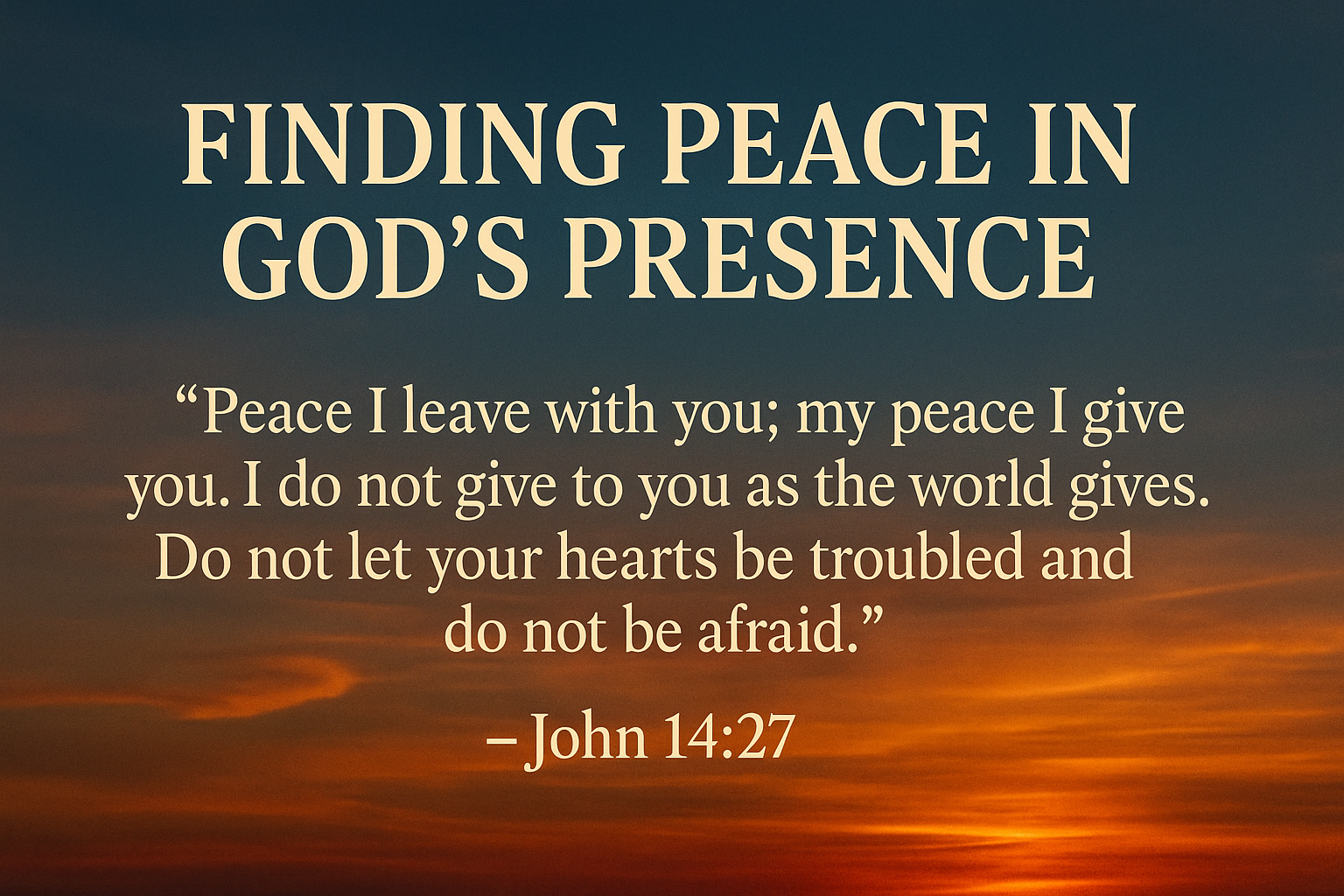
"Peace I leave with you; my peace I give you."
Notice He calls it "My peace." This isn't the peace of a quiet lake; it's the peace of a Captain who can sleep in a storm. It is a supernatural stability that doesn't make sense to the world because it doesn't depend on the world.
Part I: The Theology of Shalom 📜
Not Just the Absence of Conflict ⚔️
When Jesus said "Peace," He wasn't speaking English. He was speaking from a Hebrew mindset. The word is Shalom.
Free 7-Day Journey
Go Deeper Into Scripture
7 cinematic devotionals delivered to your inbox — one story, one verse, one life-changing truth per day.
No spam. Unsubscribe anytime.
- Worldly Peace (Pax): The absence of war. It happens when everyone stops shooting. It is fragile and temporary.
- Godly Peace (Shalom): Wholeness, completeness, soundness. It is the presence of God that puts broken pieces back together.
Jesus wasn't promising a life without trouble (He actually promised the opposite in John 16:33). He was promising internal wholeness even while external circumstances are falling apart.
For more on finding stability in chaos, read Strength in Struggles: Philippians 4:13 Will Carry You.
"Let Not Your Heart Be Troubled" ❤️
This command is active. Jesus is saying, "Do not allow your heart to be agitated."
We often think anxiety is something that happens to us. Jesus implies we have a say in the matter. By focusing on His presence, we can evict fear from the living room of our hearts.
Part II: How to Access This Peace 🛡️
The Discipline of Stillness 🤫
Peace isn't automatic; it is accessed through surrender.
Psalm 46:10 commands, "Be still, and know that I am God."
Stillness is an act of war against anxiety. It is stopping the frantic activity to acknowledge that God is God, and you are not. It is resigning as the General Manager of the Universe and trusting the One who actually holds that title.
For a practical guide on trust, explore Psalm 91:11-12 Will Command His Angels Concerning You.
The Keeper of Your Soul ⚓
Sometimes, peace comes from knowing you are protected. Psalm 121 reminds us that the "Lord is thy keeper." He doesn't sleep. He doesn't get distracted. You can rest because He is on watch.
For a deeper dive into God's vigilance, read Lift My Eyes to the Hills: A Verse-by-Verse Explanation of Psalm 121.
Part III: 3 Common Misconceptions About God's Peace 💡
Misconception 1: Peace means everything is going well.
- Correction: Jesus gave this promise the night before He was crucified! His peace thrives in the worst circumstances. It is a "peace that passes understanding" (Philippians 4:7)—meaning it shouldn't be there logically, but it is there spiritually.
Misconception 2: Anxiety is a sin.
- Correction: Anxiety is a human emotion; staying stuck in it is where we lose ground. Even Jesus felt deep distress in Gethsemane, but He brought it to the Father. Peace is the result of prayer, not the absence of emotion.
Misconception 3: I have to "feel" it to have it.
- Correction: Peace is a fruit of the Spirit, not just a mood. You can be shaking with adrenaline and still have a deep, settled conviction that God is in control. That conviction is Shalom.
Conclusion: The Gift You Must Open 🌟
Why did Jesus leave us His peace? Because He knew we couldn't make it on our own.
He didn't say, "Go find peace." He said, "My peace I give you." It is a gift. But like any gift, you have to unwrap it. You unwrap it through prayer, through trust, and through fixing your eyes on Him.
God is not asking you to carry the weight of the world. He is asking you to trust Him with it.
Did this article bless you? Share it!
Frequently Asked Questions
For Pastors & Church Leaders
Bring This Story to Life in Your Church
Cinematic sermon visuals, ready-to-use slides, and discussion guides — crafted for busy pastors who want depth without the hours.
Daily Devotionals
Start Your Day in the Word
Get a short, powerful devotional in your inbox every morning — Scripture, reflection, and a prayer to anchor your day.
No spam. Unsubscribe anytime.