God in the Fire: What Daniel 3 Teaches Us About Suffering, Obedience, and the Presence of Christ
God in the Fire: What Daniel 3 Teaches Us About Suffering, Obedience, and the Presence of Christ
Scripture: Daniel 3:16-28
There is a moment in the book of Daniel that stops every reader cold.
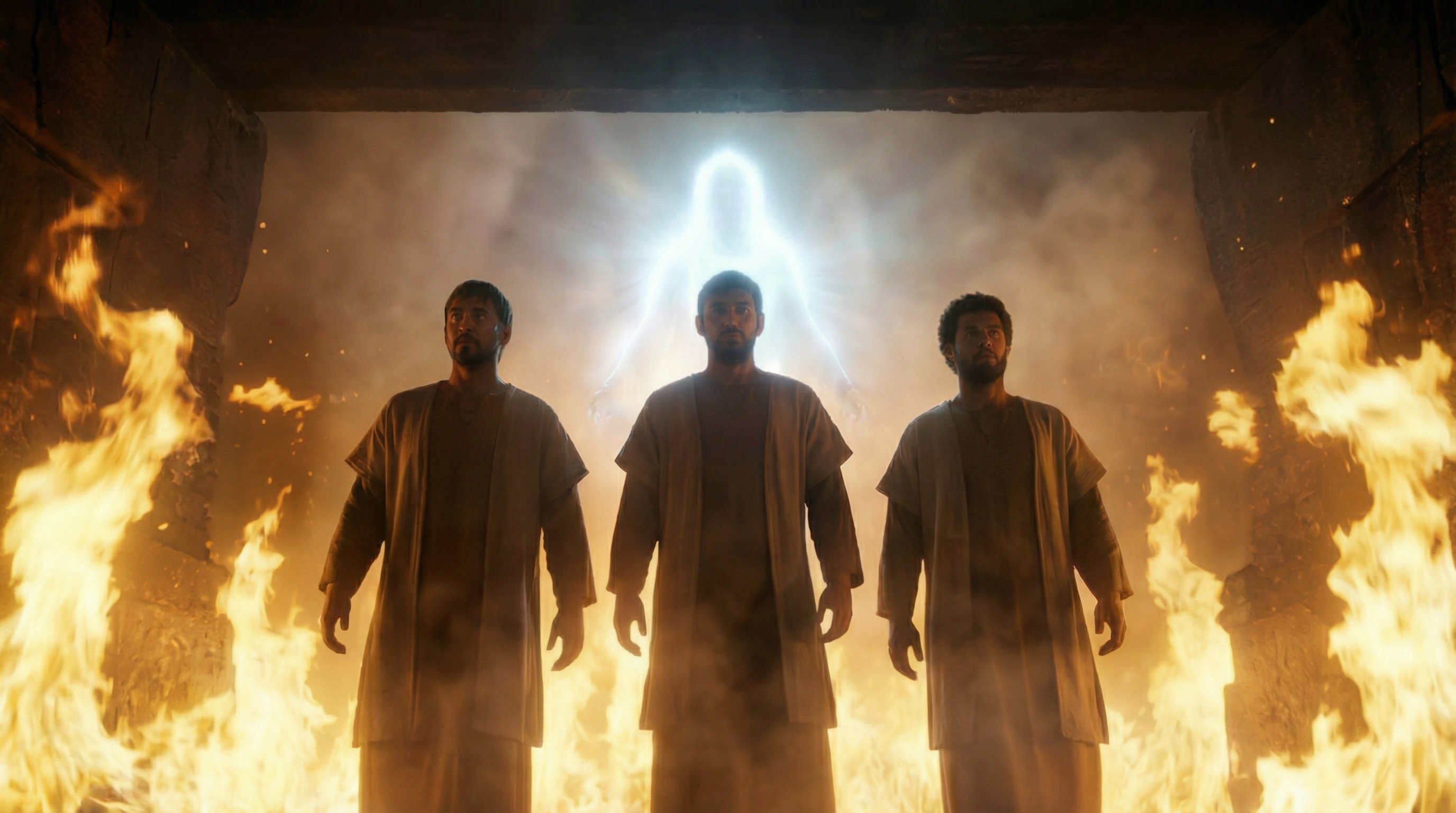
Three young men — Shadrach, Meshach, and Abednego — have been thrown into a furnace so hot it killed the soldiers who threw them in. The king watches. And then he sees something that makes him leap to his feet.
"I see four men walking around in the fire, unbound and unharmed, and the fourth looks like a son of the gods." (Daniel 3:25)
Four men. Not three.
This is the moment the entire passage has been building toward. And it is the moment that changes everything about how we understand suffering, obedience, and the presence of God.
The Setup: Obedience That Costs Something
Before we get to the fire, we need to understand what put them there.
King Nebuchadnezzar had erected a golden statue — ninety feet tall — and commanded every official in Babylon to bow down when the music played. The penalty for refusing was immediate: the blazing furnace.
Shadrach, Meshach, and Abednego refused.
Their answer to the king is one of the most remarkable statements of faith in all of Scripture:
"If we are thrown into the blazing furnace, the God we serve is able to deliver us from it, and he will deliver us from Your Majesty's hand. But even if he does not, we want you to know, Your Majesty, that we will not serve your gods or worship the image of gold you have set up." (Daniel 3:17-18)
Notice what they did not say. They did not say, "God will definitely rescue us." They said, "He is able — but even if He does not, our answer is still no."
This is the kind of faith that does not depend on outcomes. It is not a transaction. It is not "I'll obey if You protect me." It is a declaration of allegiance regardless of consequence.
That is the theological foundation of this entire passage: obedience is not a negotiation.
The Fire: When Doing Right Makes Things Worse
Nebuchadnezzar's response to their refusal is telling. He was furious. He ordered the furnace heated seven times hotter than usual. He had the strongest soldiers in his army bind them and throw them in.
The furnace was so hot that the soldiers who threw them in died from the heat.
Free 7-Day Journey
Go Deeper Into Scripture
7 cinematic devotionals delivered to your inbox — one story, one verse, one life-changing truth per day.
No spam. Unsubscribe anytime.
This is the part of the story we often skip over in Sunday school. We rush to the miracle. But the text lingers here. The fire was real. The danger was real. The men who threw them in died.
There is something important in this detail: following God does not exempt you from the fire. Sometimes obedience leads you directly into it.
This is the question the passage forces us to sit with: What do you do when you did the right thing and the fire got hotter?
What do you do when you stood for God and the cost was real?
What do you do when the furnace is not metaphorical?
The Presence: The Fourth Man in the Fire
Then comes the moment that changes everything.
The king looks into the furnace and sees something impossible. Four men — not three — walking around in the fire. Unbound. Unharmed. And the fourth, he says, looks like "a son of the gods."
Who is the fourth man?
The text does not give us a name. But the description — "the form of the fourth is like the Son of God" — has led theologians across centuries to identify this as a Christophany: a pre-incarnation appearance of Jesus Christ.
The same Christ who would later say "I will never leave you nor forsake you" (Hebrews 13:5) was present in the fire with these three men. Not watching from a distance. Not waiting at the exit. Walking with them in the flames.
This is the theological heart of the passage: God does not always remove the fire. He reveals His presence inside it.
The fire did not destroy them. It destroyed what was holding them. They went in bound. They came out free. And the only thing the fire burned was the ropes.
What This Means for the Congregation You're Preaching To
Every Sunday, your congregation walks in carrying fires you cannot see.
The diagnosis that came back wrong. The marriage that is barely holding. The child who walked away from faith. The job that disappeared. The grief that will not lift.
They are not looking for a theology lecture. They are looking for someone to tell them the truth: God is in the fire with them.
Not that the fire is not real. Not that it will not hurt. But that they are not alone in it.
This is the message of Daniel 3. And it is the message your congregation needs to hear — not just once, but preached with the weight it deserves.
Three Scenes, One Sermon
The passage breaks naturally into three movements that build toward the central revelation:
Scene 1 — The Pressure (Daniel 3:16-18) The moment of decision. Three men face the ultimatum. Their answer reveals the nature of true faith: obedience that does not negotiate with outcomes. The core truth here is that allegiance to God is not conditional on His protection.
Scene 2 — The Fire (Daniel 3:19-23) The furnace is real, the danger is real, and the cost is real. The soldiers who threw them in died. This scene refuses to minimize suffering. It holds the full weight of what it means to pay a price for obedience.
Scene 3 — The Presence (Daniel 3:24-25) The king looks in and sees four men walking. Unbound. Unharmed. The fourth like the Son of God. This is the moment the entire passage has been building toward. God's greatest gift in trial is not removal — it is companionship.
The Preaching Line That Carries the Message
"They went in bound. They came out free. The fire didn't destroy them — it destroyed what was holding them."
This is the line your congregation will carry home. It captures the paradox at the heart of the passage: the fire that was meant to destroy them became the instrument of their liberation.
The ropes burned. They walked free.
Application: Four Dimensions
Personal — What fire are you in right now? What would it mean to believe that God is walking in it with you, not waiting at the exit?
Relational — Who in your life is in a furnace they did not choose? How can you be a presence of Christ to them this week?
Communal — As a church, we are called to be a community that does not abandon people in their fires. We sit with them. We walk with them. We remind them they are not alone.
Missional — The watching world — like Nebuchadnezzar — is looking for evidence that God is real. When believers walk through fire with integrity and peace, it is a testimony that no argument can match.
For the Pastor Preparing This Message
If you are preaching Daniel 3, you are preaching into the hardest moments of your congregation's lives.
This is not a message about historical heroes. It is a message about the living Christ who is present in the furnaces your people are walking through right now.
Preach it with weight. Preach it with honesty. Do not rush past the fire to get to the miracle. Let your congregation sit in the furnace long enough to feel the heat — and then show them the fourth man.
The God in the Fire Sermon Kit was built for exactly this kind of Sunday. It includes a 60-second cinematic opener film, motion backgrounds, verse slides, full preaching notes, a small group guide, and everything you need to preach this message with the visual and pastoral weight it deserves — in 60 minutes of prep time.
Because your congregation is in the fire. They need to know God is in it with them.
Frequently Asked Questions
Who is the fourth man in Daniel 3:25? The identity of the fourth figure in the furnace has been debated by theologians for centuries. The king describes him as looking "like a son of the gods" (or "the Son of God" in some translations). Many Christian theologians identify this as a Christophany — a pre-incarnation appearance of Jesus Christ. While the text does not explicitly name him, the description aligns with other Old Testament appearances of the Angel of the Lord, who is often understood to be the pre-incarnate Christ.
What is the main lesson of Daniel 3? The central lesson of Daniel 3 is that God does not always remove His people from suffering — but He is present with them in it. Shadrach, Meshach, and Abednego were not spared from the furnace; they were accompanied through it. The passage teaches that true faith is not conditional on God's protection, and that God's greatest gift in trial is often His companionship rather than His intervention.
What does "even if he does not" mean in Daniel 3:18? The phrase "but even if he does not" (Daniel 3:18) is one of the most theologically significant statements in the Old Testament. It represents a faith that does not depend on outcomes — Shadrach, Meshach, and Abednego declared that they would not bow to Nebuchadnezzar's idol regardless of whether God rescued them. This is not fatalism; it is a declaration of allegiance that transcends circumstances.
What is a Christophany? A Christophany is a pre-incarnation appearance of Jesus Christ in the Old Testament. These appearances are identified by descriptions of a divine figure who appears in human or angelic form, often identified as "the Angel of the Lord." Daniel 3:25 is one of the most striking examples, where the fourth figure in the furnace is described as having the appearance of "the Son of God." Other notable Christophanies include the Angel of the Lord who wrestled with Jacob (Genesis 32) and appeared to Moses in the burning bush (Exodus 3).
Did this article bless you? Share it!
Frequently Asked Questions
For Pastors & Church Leaders
Bring This Story to Life in Your Church
Cinematic sermon visuals, ready-to-use slides, and discussion guides — crafted for busy pastors who want depth without the hours.
Free 7-Day Journey
Walk With Jesus — Day by Day
7 cinematic devotionals on the life of Christ, delivered to your inbox. One story, one verse, one truth per day.
No spam. Unsubscribe anytime.