Revelation & Bible Mysteries
The 7 Churches of Revelation: Lessons for the Modern Church
The 7 Churches of Revelation: Lessons for the Modern Church
TL;DR: The letters to the 7 churches of Revelation in chapters 2 and 3 are far more than historical artifacts. Penned by the Apostle John under divine inspiration, these messages from Jesus Himself reveal His intimate knowledge of His church's strengths, struggles, and spiritual state. From lost first love (Ephesus) to unwavering faithfulness (Smyrna, Philadelphia) and dangerous compromise (Pergamum, Thyatira), to spiritual deadness (Sardis) and lukewarm self-sufficiency (Laodicea), each church offers a profound mirror for us today. This pillar article dives deep into each letter, exploring its historical context and, critically, extracting powerful, practical lessons for every believer and congregation striving to be a vibrant, Christ-honoring church in the 21st century. Prepare to examine your own heart and the heart of your church.
1. Unlocking the Ancient Messages for Today: Why These Letters Still Speak
Have you ever found yourself drawn to the enigmatic book of Revelation, perhaps intrigued by its prophecies, its vivid imagery, or its ultimate message of hope? For many, the initial chapters, particularly those addressing the 7 churches of Revelation, can feel like a direct, personal encounter with the risen Christ. These aren't just obscure historical documents; they are living words, infused with the Spirit's power, intended to pierce through time and speak to our condition, our challenges, and our call to faithfulness.
As an expert Christian writer and pastor, I've spent countless hours in the Scriptures, and few passages resonate with such immediacy and practical application as these letters. They offer us a divine X-ray, revealing the spiritual health – or illness – of congregations and individual believers alike. In a world increasingly complex, where the church faces both external pressures and internal struggles, understanding these ancient messages is not merely an academic exercise; it's a spiritual necessity.
This article aims to be the most comprehensive and authoritative guide you'll find on the 7 churches of Revelation, delving into each one with historical context, theological depth, and, most importantly, profound lessons for the modern church. We'll unpack Jesus's commendations, His criticisms, His calls to repentance, and His glorious promises to those who overcome. My prayer is that as we journey through these letters, you and your church will "hear what the Spirit says to the churches" and be moved to a deeper walk with our Lord.
2. The Author, The Audience, and the Authority: Why Revelation's Letters Matter
Before we unpack the individual messages, let's set the stage. The book of Revelation opens with the Apostle John, exiled on the island of Patmos "on account of the word of God and the testimony of Jesus" Revelation 1:9. There, he receives a breathtaking vision of the risen Christ – glorious, powerful, and utterly authoritative. This is not a mere human's opinion; these are direct pronouncements from the One who holds "the keys of Death and Hades" Revelation 1:18.
Jesus Himself dictates these seven specific letters, addressed to seven literal, historical churches located in the Roman province of Asia Minor (modern-day Turkey). The number seven, often symbolizing completeness or perfection in biblical numerology, suggests that while these messages were for specific congregations, they also carry universal relevance for all churches throughout history. They represent a spectrum of challenges and triumphs that any church, at any time, might experience.
Each letter follows a consistent pattern, revealing Jesus's intimate knowledge of His people:
- A specific self-description of Jesus: Tailored to the unique situation of each church.
- Commendation: What the church is doing well (if anything).
- Criticism: Where the church is failing or falling short.
- Exhortation/Call to Repentance: What the church needs to do to correct its course.
- Promise to the Overcomer: A specific blessing for those who heed His words and persevere.
- The repeated refrain: "He who has an ear, let him hear what the Spirit says to the churches." This isn't just for the original recipients; it's for us today.
Let's look at our focus verse for this article, which sets the stage for the first of these churches:
Revelation 2:1-7 (ESV):
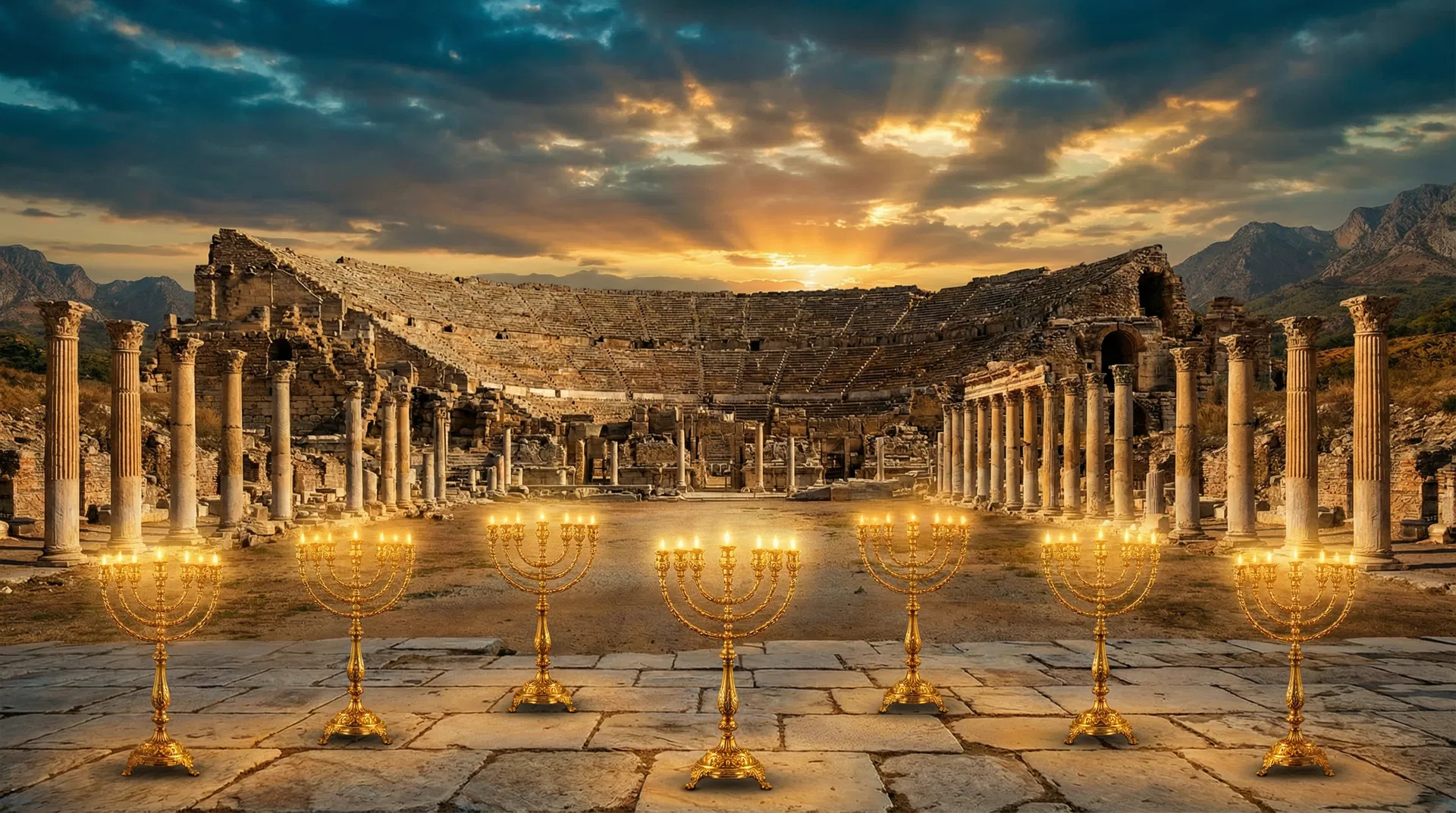
“To the angel of the church in Ephesus write: ‘The words of him who holds the seven stars in his right hand, who walks among the seven golden lampstands.
‘I know your works, your toil and your patient endurance, and how you cannot bear with those who are evil, but have tested those who call themselves apostles and are not, and found them to be false. I know that you are enduring patiently and bearing up for my name's sake, and that you have not grown weary. But this I have against you, that you have abandoned the love you had at first. Remember therefore from where you have fallen; repent, and do the works you did at first. If not, I will come to you and remove your lampstand from its place—unless you repent. Yet this you have: you hate the works of the Nicolaitans, which I also hate. He who has an ear, let him hear what the Spirit says to the churches. To the one who conquers I will grant to eat of the tree of life, which is in the paradise of God.’
This divine pattern, starting with Ephesus, reveals a profound truth: Jesus knows His church, sees all, and cares deeply about its spiritual condition.
3. Ephesus, Smyrna, and Pergamum: The Spectrum of Faithfulness and Early Challenges
The first three of the 7 churches of Revelation present us with a fascinating spectrum of early church life, from commendable works coupled with a critical spiritual failing, to severe persecution met with rich spiritual reward, and finally, to a dangerous compromise with the world.
3.1. Ephesus: The Church That Lost Its First Love
Ephesus was a prominent, wealthy, and highly influential city—a hub of trade, culture, and pagan worship, home to the immense Temple of Artemis (one of the Seven Wonders of the Ancient World). The church there had a rich history, having been founded by Paul, taught by Apollos, and later pastored by Timothy, and possibly even John himself.
Jesus identifies Himself to Ephesus as "him who holds the seven stars in his right hand, who walks among the seven golden lampstands" Revelation 2:1. This imagery reminds them of His sovereign control over the church leaders (the stars) and His active presence within and among His churches (the lampstands).
Commendation: Jesus had much praise for Ephesus. He commended their "works, your toil and your patient endurance" Revelation 2:2. They were doctrinally sound, having "tested those who call themselves apostles and are not, and found them to be false" Revelation 2:2. They hated evil, stood firm for His name, and did not grow weary. This was a busy, active, discerning church!
Criticism: Yet, despite all their commendable activity and theological accuracy, Jesus had one devastating indictment: "But this I have against you, that you have abandoned the love you had at first" Revelation 2:4. Their fervent love for Christ and for one another, which likely characterized their early days, had grown cold. They were doing all the right things, but their heart was no longer fully in it.
Exhortation: Jesus's call to repentance is clear and threefold: "Remember therefore from where you have fallen; repent, and do the works you did at first" Revelation 2:5. He warns them that if they don't, He will remove their lampstand – their very existence as a church.
Promise to the Overcomer: "To the one who conquers I will grant to eat of the tree of life, which is in the paradise of God" Revelation 2:7.
Lesson for the Modern Church: How often do we, as individual believers or as congregations, fall into the trap of the Ephesians? We can be doctrinally precise, busy with programs, active in ministry, and vigilant against heresy, yet lose the passionate, relational love that should define our faith. Our works can become duty without delight, service without surrender. This letter reminds us that outward activity, however good, is insufficient without an inward, vibrant love for Christ and for one another. Are we truly loving God with all our heart, soul, mind, and strength, and our neighbor as ourselves Matthew 22:37-39? We must regularly examine our hearts, return to the simplicity of our initial devotion, and allow love to be the driving force behind all we do.
3.2. Smyrna: The Persecuted But Rich Church
Smyrna was a beautiful, prosperous city, a rival to Ephesus, and fiercely loyal to Rome. Its inhabitants were known for emperor worship, and this devotion brought them into direct conflict with Christians who refused to acknowledge Caesar as Lord.
Jesus introduces Himself to Smyrna as "the first and the last, who died and came to life" Revelation 2:8. This description is especially comforting to a persecuted church, reminding them that He understands suffering, has overcome death, and holds ultimate authority over life and eternity.
Commendation: Jesus offers no criticism to Smyrna, only profound commendation. He knows their "tribulation and your poverty (but you are rich!)" Revelation 2:9. They faced intense suffering, likely economic hardship, and slander from those who claimed to be Jews but were "a synagogue of Satan." Despite their material poverty, Jesus declares them spiritually rich. This is a powerful paradox.
Exhortation: He encourages them to "not fear what you are about to suffer... Be faithful unto death, and I will give you the crown of life" Revelation 2:10. He even forewarns them of further tribulation, emphasizing that their faithfulness would be tested.
Promise to the Overcomer: "The one who conquers will not be hurt by the second death" Revelation 2:11. This promise assures them of eternal security, far outweighing any earthly suffering.
Free 7-Day Journey
Go Deeper Into Scripture
7 cinematic devotionals delivered to your inbox — one story, one verse, one life-changing truth per day.
No spam. Unsubscribe anytime.
Lesson for the Modern Church: The church in Smyrna stands as a beacon of hope and a challenge for us. While many of us in the Western world may not face physical persecution or economic deprivation for our faith, there is an increasing societal pressure to compromise, to soften our message, or to remain silent. This letter reminds us that true spiritual wealth often flourishes in adversity. Are we willing to endure "tribulation" for Christ's sake? Do we value spiritual riches above material comfort? The Smyrnan church teaches us that faithfulness in suffering is a powerful witness and earns an eternal reward. It challenges us to prepare our hearts for potential hardship and to stand firm, even to the point of death, knowing our ultimate hope is in Christ alone. When we encounter fellow believers in regions of the world where overt persecution is the norm, this letter should ignite our empathy and inspire our prayers, reminding us that they are "rich" in ways the comfortable church often forgets.
3.3. Pergamum: The Compromising Church
Pergamum was a center of Roman administration and imperial cult worship. It was home to a massive altar dedicated to Zeus and was considered "where Satan's throne is" Revelation 2:13 – likely a reference to its fervent idolatry and the aggressive persecution of Christians there, including the martyrdom of Antipas, a "faithful witness."
Jesus addresses Pergamum as the one "who has the sharp two-edged sword" Revelation 2:12. This imagery emphasizes His authority to judge and execute justice, a direct warning to a church that was tolerating ungodliness.
Commendation: Despite its challenging location, Jesus acknowledges their faithfulness: "I know where you dwell, where Satan's throne is. Yet you hold fast my name, and you did not deny my faith even in the days of Antipas, my faithful witness, who was killed among you, where Satan dwells" Revelation 2:13. They had endured persecution and remained loyal to Christ's name.
Criticism: However, their faithfulness had limits. Jesus criticizes them for tolerating false teaching and immorality: "But I have a few things against you: you have some there who hold the teaching of Balaam... so that they eat food sacrificed to idols and practice sexual immorality. So also you have some who hold the teaching of the Nicolaitans" Revelation 2:14-15. They were allowing teachings that blurred the lines between Christian ethics and pagan practices, leading to spiritual and moral compromise.
Exhortation: "Repent then! If not, I will come to you soon and make war against them with the sword of my mouth" Revelation 2:16. The call is urgent and carries a dire warning of divine judgment if they refuse to purify themselves.
Promise to the Overcomer: "To the one who conquers I will give some of the hidden manna, and I will give him a white stone, with a new name written on the stone that no one knows except the one who receives it" Revelation 2:17. Hidden manna symbolizes spiritual nourishment and intimacy with Christ, while the white stone with a new name speaks of vindication, acceptance, and a unique, personal relationship with God.
Lesson for the Modern Church: The Pergamum church's compromise is a chilling warning for us today. In an increasingly pluralistic and "tolerant" society, there's immense pressure on the church to dilute its message, to embrace cultural norms that contradict biblical truth, and to avoid "offensive" doctrines. We might applaud "tolerance" and "inclusivity" to the point of tolerating sin and including false teaching within our fellowship. The danger is not necessarily outright denial of Christ but a subtle erosion of truth and holiness for the sake of cultural acceptance or perceived unity. Are we truly holding fast to biblical truth, even when it's unpopular? Are we discerning concerning false teaching that creeps in subtly? This letter reminds us that while we are called to love sinners, we must never compromise with sin itself or with doctrines that undermine the gospel. Sound doctrine and moral purity are non-negotiable foundations of a healthy church. (Learn more about the Nicolaitans at GotQuestions.org)
4. Thyatira, Sardis, and Philadelphia: Navigating Corruption, Complacency, and Steadfastness
Moving through the 7 churches of Revelation, we encounter another trio, each confronting distinct spiritual maladies or shining forth with exemplary faithfulness. These messages continue to probe the depths of our own churches and hearts.
4.1. Thyatira: The Tolerant Yet Corrupt Church
Thyatira was a smaller, less significant city than Ephesus or Pergamum, known for its numerous trade guilds (like dyers, bronze-workers, potters), which often required members to participate in pagan feasts associated with their trade. This created a unique challenge for Christians.
Jesus introduces Himself to Thyatira with striking imagery: "The Son of God, who has eyes like a flame of fire, and whose feet are like burnished bronze" Revelation 2:18. These images portray His intense scrutiny, unwavering holiness, and impending judgment. He sees everything.
Commendation: Surprisingly, Thyatira receives extensive praise, even more than Ephesus: "I know your works, your love and faith and service and patient endurance, and that your latter works exceed the first" Revelation 2:19. This church was active, growing, and improving in its good deeds!
Criticism: However, their commendable activities were overshadowed by a severe problem: "But I have this against you, that you tolerate that woman Jezebel, who calls herself a prophetess and is teaching and seducing my servants to practice sexual immorality and to eat food sacrificed to idols" Revelation 2:20. This "Jezebel" (likely a symbolic name for a real person or faction) was promoting a dangerous syncretism, encouraging compromise with pagan practices, which often involved immoral behavior, possibly to navigate the trade guilds. The church tolerated this corruption rather than confronting it.
Exhortation: Jesus warns of severe judgment for Jezebel and her followers, bringing sickness and death, "unless they repent of her works." He calls the rest of the church to "hold fast what you have until I come" Revelation 2:24-25.
Promise to the Overcomer: "The one who conquers and who keeps my works until the end, to him I will give authority over the nations... and I will give him the morning star" Revelation 2:26-28. This promise speaks of shared authority in His kingdom and intimate fellowship with Christ Himself.
Lesson for the Modern Church: Thyatira is a stark warning about the dangers of unchecked tolerance. A church can be active, loving, and growing in good works, yet be fatally undermined by tolerating pervasive sin and false teaching within its ranks. Are we so focused on outward metrics of growth or service that we neglect internal purity? Is our desire for unity or avoiding conflict leading us to tolerate destructive doctrines or immoral lifestyles that contradict God's Word? This letter reminds us that true love for Christ and His people necessitates discernment, confrontation of sin, and a commitment to holiness, even when it's uncomfortable. We must not mistake tolerance of sin for genuine grace. (Explore further on BlueLetterBible.org)
4.2. Sardis: The Dead Church Walking
Sardis was an ancient city with a glorious past, but by the time of John, it was largely living on its reputation. It sat atop a high, easily defensible plateau, yet had famously fallen twice due to complacency and lack of vigilance.
Jesus identifies Himself to Sardis as "the one who has the seven spirits of God and the seven stars" Revelation 3:1. This emphasizes His absolute spiritual authority and His perfect knowledge of their spiritual condition, despite their outward appearance.
Criticism (no commendation): Unlike most other churches, Jesus offers no commendation to Sardis. His criticism is blunt and devastating: "I know your works. You have the reputation of being alive, but you are dead" Revelation 3:1. This church was a graveyard of spiritual vitality. They had an impressive outward facade, perhaps large numbers, beautiful buildings, or a long history, but spiritually, they were lifeless. Their "works" were incomplete or stagnant, lacking true spiritual energy.
Exhortation: "Wake up, and strengthen what remains and is about to die, for I have not found your works complete in the sight of my God. Remember then what you received and heard. Keep it, and repent. If you will not wake up, I will come like a thief, and you will not know at what hour I will come against you" Revelation 3:2-3. This is a desperate call for revival, a return to their initial faith and teaching.
Promise to the Overcomer: Despite the grim prognosis, there's hope: "Yet you have still a few names in Sardis, people who have not soiled their garments, and they will walk with me in white, for they are worthy" Revelation 3:4. To the overcomer: "He who conquers will be clothed thus in white garments, and I will never blot his name out of the book of life. I will confess his name before my Father and before his angels" Revelation 3:5. This promises purity, eternal security, and divine recognition.
Lesson for the Modern Church: Sardis presents perhaps the most terrifying warning for modern churches. It's possible to have a reputation for being a thriving, "alive" church—with programs, traditions, and even historical significance—yet be spiritually dead. Are we merely going through the motions? Is our worship lifeless, our teaching rote, our fellowship superficial? Do we prioritize maintaining an image over pursuing genuine spiritual vitality? This letter forces us to look beyond outward appearances and ask if the Spirit of God is truly at work, producing life and fruit. We must constantly "wake up" to spiritual apathy, repent of our complacency, and return to the vibrant, life-giving truths we first received. True life comes not from reputation, but from a dynamic, living relationship with Christ. (Read more about the dead church of Sardis at DesiringGod.org)
4.3. Philadelphia: The Faithful & Enduring Church
Philadelphia, meaning "brotherly love," was a city prone to earthquakes due to its location in a volcanic region. It was a missionary city, often called a "gateway" to the East, aiming to spread Greek culture.
Jesus identifies Himself to Philadelphia as "the holy one, the true one, who has the key of David, who opens and no one will shut, who shuts and no one opens" Revelation 3:7. This speaks of His absolute sovereignty, His divine authority, and His ability to open doors of opportunity for ministry that no one can close.
Commendation: Philadelphia receives no criticism, only praise! "I know your works. Behold, I have set before you an open door, which no one is able to shut. I know that you have but little power, and yet you have kept my word and have not denied my name" Revelation 3:8. Despite their "little power" (perhaps numerical or financial weakness), they were faithful, obedient to God's word, and steadfast in their confession of Christ. They were true to their name, demonstrating "brotherly love" through their faithfulness.
Exhortation: "I am coming soon. Hold fast what you have, so that no one may seize your crown" Revelation 3:11. The instruction is simply to persevere in what they are already doing so well.
Promise to the Overcomer: "The one who conquers, I will make him a pillar in the temple of my God; never shall he go out of it, and I will write on him the name of my God, and the name of the city of my God, the new Jerusalem, which comes down from heaven from my God, and my own new name" Revelation 3:12. This promises permanence, divine identity, and eternal security within God's presence.
Lesson for the Modern Church: Philadelphia is the encouraging example for all of us. This church, despite its apparent weakness, was strong where it counted: in its faithfulness to God's Word and its refusal to deny Christ. This reminds us that God is not primarily impressed by our size, budget, or influence, but by our faithfulness, our obedience, and our perseverance. Are we faithful with the "little power" we have? Are we diligently keeping His Word and proclaiming His name, even when it's unpopular or difficult? This letter assures us that when we are faithful, God opens doors of ministry that no one can shut. It's a powerful call to humble, steadfast obedience, trusting that our small efforts, empowered by God, can yield great fruit and eternal reward. It reminds us that consistency in the basics of faith—love, obedience, and endurance—is profoundly powerful in God's eyes.
5. Laodicea: The Peril of Lukewarmness and Self-Sufficiency
Our journey through the 7 churches of Revelation culminates with the most scathing indictment of all, delivered to the church in Laodicea. This letter holds a unique and particularly pointed challenge for many modern churches, especially in affluent societies.
Laodicea was a highly prosperous city, renowned for its banking, its textile industry (producing black wool), and its medical school, particularly for an eye salve. Ironically, despite its wealth, it suffered from a poor water supply; water was piped in from distant hot and cold springs, arriving lukewarm and often nauseating.
Jesus introduces Himself to Laodicea as "the Amen, the faithful and true witness, the beginning of God's creation" Revelation 3:14. This emphasizes His unwavering truthfulness and His ultimate authority as the Creator, setting a stark contrast with the church's self-deception.
Criticism (no commendation): Like Sardis, Laodicea receives no commendation. Jesus's criticism is devastating: "I know your works: you are neither cold nor hot. Would that you were either cold or hot! So, because you are lukewarm—and neither hot nor cold—I will spit you out of my mouth" Revelation 3:15-16. This "lukewarmness" isn't neutrality; it's nauseating indifference, a lack of spiritual fervor or conviction.
Even worse, their spiritual condition was coupled with profound self-deception: "For you say, ‘I am rich, I have prospered, and I need nothing,’ not knowing that you are wretched, pitiable, poor, blind, and naked" Revelation 3:17. They relied on their earthly prosperity, believing they were spiritually complete, but Jesus saw them as utterly destitute in every spiritual sense. Their material wealth had blinded them to their true poverty before God.
Exhortation: Jesus's call to repentance is radical and counter-cultural: "I counsel you to buy from me gold refined by fire, so that you may be rich, and white garments so that you may clothe yourself and the shame of your nakedness may not be seen, and salve to anoint your eyes, so that you may see" Revelation 3:18. He urges them to trade their worthless earthly riches for true spiritual wealth, purity, and discernment that only He can provide. He ends with an incredibly tender invitation: "Behold, I stand at the door and knock. If anyone hears my voice and opens the door, I will come in to him and eat with him, and he with me" Revelation 3:20. Even to this dead-cold-lukewarm church, Jesus offers the hope of intimate fellowship.
Promise to the Overcomer: "The one who conquers, I will grant him to sit with me on my throne, as I also conquered and sat down with my Father on his throne" Revelation 3:21. This is the highest promise of all—shared reign and glory with Christ.
Lesson for the Modern Church: The letter to Laodicea is arguably the most relevant and terrifying for the affluent, comfortable church of today. In societies overflowing with material blessings, it's dangerously easy to become spiritually complacent, self-sufficient, and convinced that we "need nothing." Our wealth can become a spiritual blindfold, preventing us from recognizing our utter dependence on Christ. Lukewarmness—that state of indifference, neither passionately for Christ nor outright against Him—is abhorrent to Jesus. It implies a lack of conviction, spiritual laziness, and a superficial faith that poses a greater danger than outright opposition because it often goes unrecognized.
Are we pursuing genuine spiritual riches (faith, love, holiness) or are we content with earthly comfort and a shallow religiosity? Do we recognize our spiritual poverty and desperate need for Christ's "gold," "white garments," and "eye salve"? Jesus stands at the door of our comfortable, self-satisfied churches and hearts, still knocking. This letter is a piercing call to radical repentance, a re-evaluation of our priorities, and a fervent invitation to truly open our hearts and pursue intimate fellowship with the One who alone can make us truly rich. (A thoughtful reflection on Laodicea by The Bible Project)
6. Timeless Truths for a Modern World: Synthesizing the Core Lessons
Having examined the 7 churches of Revelation individually, we can now draw out overarching themes and timeless truths that cut across all the letters and speak powerfully to us today. These are not merely historical critiques but foundational principles for spiritual health.
- Jesus Knows His Church Intimately: From Ephesus's tireless work to Smyrna's hidden riches, from Pergamum's compromise to Sardis's deadness, Philadelphia's faithfulness, and Laodicea's self-deception—Jesus sees and knows everything. No façade can fool Him. This should be both comforting (He sees our genuine efforts) and convicting (He sees our hidden sins and compromises).
- Love is Paramount: The criticism of Ephesus ("lost your first love") underscores that all our works, our theological precision, and our service are diminished if they don't flow from a fervent love for Christ and one another 1 Corinthians 13:1-3.
- The Danger of Compromise and False Teaching: Pergamum and Thyatira both struggled with tolerating sin and false doctrine within their midst. This warns us against cultural accommodation and the subtle erosion of biblical truth for the sake of popularity or ease. Purity of doctrine and practice is essential for the church's health.
- Persecution Can Forge Spiritual Strength: Smyrna's "poverty" that was truly "rich" highlights that external hardship often refines and deepens our faith. We should not fear tribulation but see it as an opportunity for God's grace to abound.
- Spiritual Vitality Over Reputation: Sardis stands as a stark warning: a church can have an excellent reputation or a bustling schedule yet be spiritually dead. God cares about the heart and true spiritual life, not just outward appearances.
- Faithfulness, Not Power, Pleases God: Philadelphia, with its "little power," was highly commended for simply keeping God's Word and not denying His name. Our strength lies in obedience and reliance on God, not in our own human capabilities or worldly influence.
- Lukewarmness is Abhorrent to Christ: Laodicea reveals that spiritual indifference is worse than outright opposition. It signifies a lack of passion, a deceptive self-sufficiency, and ultimately, a rejection of Christ's fervent call to true discipleship.
- Repentance is Always the Call: To every church except Smyrna and Philadelphia, Jesus issues a clear call to repent. This demonstrates God's mercy and His desire for His people to return to Him, but also the urgency of turning away from sin and spiritual apathy.
- Promises for the Overcomer: Each letter ends with a promise to "the one who conquers." This theme of overcoming speaks to active, intentional discipleship, persevering through challenges, and living a life dedicated to Christ, no matter the cost. It's a call to individual responsibility within the corporate body.
7. How We Can Be a "Revelation-Ready" Church Today
The messages to the 7 churches of Revelation are not just for ancient history; they are a divine mirror for every congregation and every believer today. So, how do we apply these profound lessons to ensure we are a vibrant, Christ-honoring church?
-
Regular Spiritual Self-Assessment: Just as Jesus knew the state of each church, we must regularly ask ourselves, and our church leadership must ask the congregation:
- Do we have our "first love"? Are we passionate about Jesus and each other, or have our good works become rote duty? (Ephesus)
- Are we willing to suffer for Christ? Is our faith strong enough to endure hardship, or are we too comfortable? (Smyrna)
- Are we compromising truth for comfort or acceptance? Have we allowed worldly philosophies or immoral practices to creep in? (Pergamum, Thyatira)
- Do we truly have spiritual life, or are we just going through the motions? Is our outward activity matched by inward vitality? (Sardis)
- Are we faithfully keeping God's Word and standing for His name? Are we making the most of the opportunities He gives us, regardless of our perceived size or strength? (Philadelphia)
- Are we lukewarm and self-sufficient, or passionately dependent on Christ? Do we recognize our spiritual poverty and desperate need for Him? (Laodicea)
-
Prioritize Love as the Foundation: Consciously cultivate a culture of passionate love for God and genuine, sacrificial love for fellow believers. This means prioritizing fellowship, reconciliation, and selfless service, ensuring that our programs and activities are expressions of love, not substitutes for it.
-
Commit to Biblical Truth and Purity: Unwaveringly uphold the authority of Scripture in doctrine and ethics. This requires diligent teaching, robust discipleship, and a willingness to confront false teaching or sin, even when difficult. We must not mistake worldly tolerance for godly grace. (Learn more about the church's mission on BibleProject.com)
-
Embrace Resilience and Perseverance: Recognize that hardship and persecution are often part of the Christian walk. Equip ourselves and our congregations to stand firm, finding our strength and richness in Christ, even in the face of adversity.
-
Seek Genuine Spiritual Vitality: Move beyond mere religious activity to pursue a deep, authentic relationship with Christ. Encourage fervent prayer, heartfelt worship, and active engagement with God's Word, allowing the Holy Spirit to bring true life and transformation.
-
Practice Humble Dependence on Christ: Resist the temptation of self-sufficiency, especially in times of prosperity. Continually acknowledge our utter need for Jesus for every spiritual blessing—His "gold," "white garments," and "eye salve." Let us always be found knocking on His door, inviting Him into our hearts and our corporate life.
-
Cultivate a Spirit of Overcoming: Understand that the Christian life is a battle. Encourage personal responsibility to "conquer" sin, apathy, and worldly temptations, embracing the promises of God for those who persevere to the end.
8. Conclusion: A Call to Hear What the Spirit Says
The 7 churches of Revelation provide a timeless and incredibly relevant spiritual check-up for every Christian and every church. They are not simply a record of past successes and failures, but a direct address from the risen Christ to His people across the ages. His words are not merely to inform us but to transform us.
As we conclude this deep dive, let's remember the repeated command: "He who has an ear, let him hear what the Spirit says to the churches." This is a call to listen intently, to examine our own hearts and the spiritual health of our congregations with brutal honesty, and to respond in repentance and renewed devotion. Jesus, who walks among the lampstands, knows exactly where we stand. May we, by His grace, strive to be churches characterized by fervent love, unwavering truth, sacrificial service, and steadfast faithfulness, ready for His glorious return.
Frequently Asked Questions (FAQ)
Q1: Were the 7 churches of Revelation literal churches, or are they symbolic of different church ages? A1: These were definitely seven literal, historical churches existing in Asia Minor at the time John wrote Revelation. However, the consistent phrase "He who has an ear, let him hear what the Spirit says to the churches" indicates that their messages are also symbolic and apply universally to churches throughout history, and to individual believers. Some theological interpretations also view them as prophetic representations of distinct church ages, but their primary application is timeless.
Q2: What is the significance of the number "seven" in the context of these churches? A2: In biblical numerology, seven often represents completeness, perfection, or divine fullness. While there were certainly more than seven churches in Asia Minor at the time, Jesus chose these seven specific ones to deliver a comprehensive message that addresses the full spectrum of challenges and spiritual states that His church might face throughout history.
Q3: What does it mean to be an "overcomer" or "conqueror" in these letters? A3: The promise to "the one who conquers" appears in every letter. It refers to those who persevere in faith, resist temptation, overcome sin and compromise, and remain faithful to Christ despite external pressures or internal struggles. It implies active, intentional discipleship and endurance in the Christian walk, trusting in Christ's power to enable victory.
Q4: Can a modern church identify as one of the 7 churches of Revelation? A4: While no single modern church will perfectly match one ancient church, the lessons are designed to prompt self-reflection. Most churches today likely exhibit characteristics of several of these churches. For example, a church might have the theological soundness of Ephesus but a similar struggle with a cooling love, or the external activity of Thyatira but a similar tolerance of compromise. The point is not to label, but to honestly assess and repent where necessary.
Q5: What is the "hidden manna" and the "white stone with a new name" promised to Pergamum? A5: "Hidden manna" (Revelation 2:17) likely symbolizes spiritual nourishment and intimate fellowship with Christ, a deeper experience of His divine provision than the manna in the wilderness. The "white stone with a new name" could refer to ancient customs where a white stone symbolized acquittal, honor, or admission to a special group, and a new name often signified a new identity or special relationship with God. Both promises speak to divine approval, acceptance, and a unique, personal intimacy with Christ for those who remain faithful.
Q6: Why is "lukewarmness" so strongly condemned in the letter to Laodicea? A6: Lukewarmness (Revelation 3:16) is condemned because it represents spiritual indifference and a lack of passionate commitment to Christ. It implies a nominal, half-hearted faith that is neither inspiring (like hot water used for healing) nor refreshing (like cold water for quenching thirst). Jesus found it nauseating because it's deceptive (they thought they were rich but were poor), unproductive, and utterly offensive to a God who demands wholehearted devotion Matthew 22:37. It's a dangerous state of self-satisfaction that often blinds individuals and churches to their true spiritual poverty.
Reflection Question: After exploring the 7 churches of Revelation, which specific message resonates most deeply with your own spiritual journey or the current state of your church, and what immediate step can you take in response to "hear what the Spirit says"?
Did this article bless you? Share it!
Frequently Asked Questions
For Pastors & Church Leaders
Bring This Story to Life in Your Church
Cinematic sermon visuals, ready-to-use slides, and discussion guides — crafted for busy pastors who want depth without the hours.
Free 7-Day Journey
Unlock the Book of Revelation
7 days of guided study through end-times prophecy — no seminary required. Clarity on the seals, trumpets, and the return of Christ.
No spam. Unsubscribe anytime.