Bible Mysteries
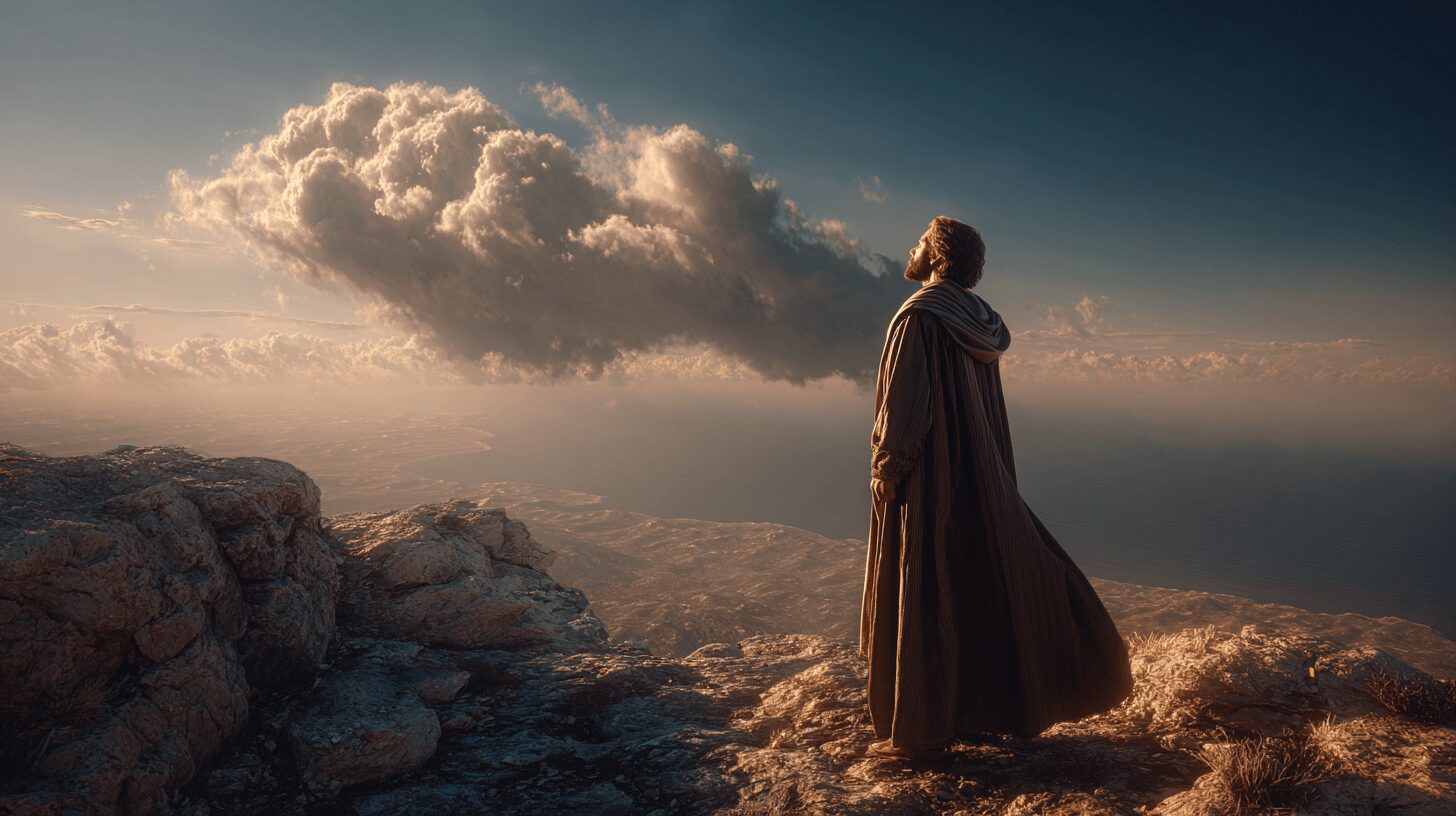
Why Did Heaven Send Rain When Elijah Saw a Cloud Like a Hand?
🌧️ The Sound of Abundance: When Faith Hears What God Has Promised ✨
Have you ever prayed for something for so long that you started to wonder if the sky was made of brass?
In 1 Kings 18 , Israel wasn't just thirsty; the nation was dying. For three and a half years, the heavens had been shut tight. The creeks were dust. The cattle were skeletons.
This wasn't just a weather anomaly; it was a theological exposure. King Ahab and Queen Jezebel had led the nation into worshiping Baal —the Canaanite "Storm God" who was supposed to control the rain. By withholding rain, Yahweh was revealing the impotence of Baal. The false god couldn't squeeze a single drop out of the sky.
Then, the showdown on Mount Carmel happened. Fire fell from heaven. The people fell on their faces crying, "The LORD, he is the God!"
But the sky was still blue.
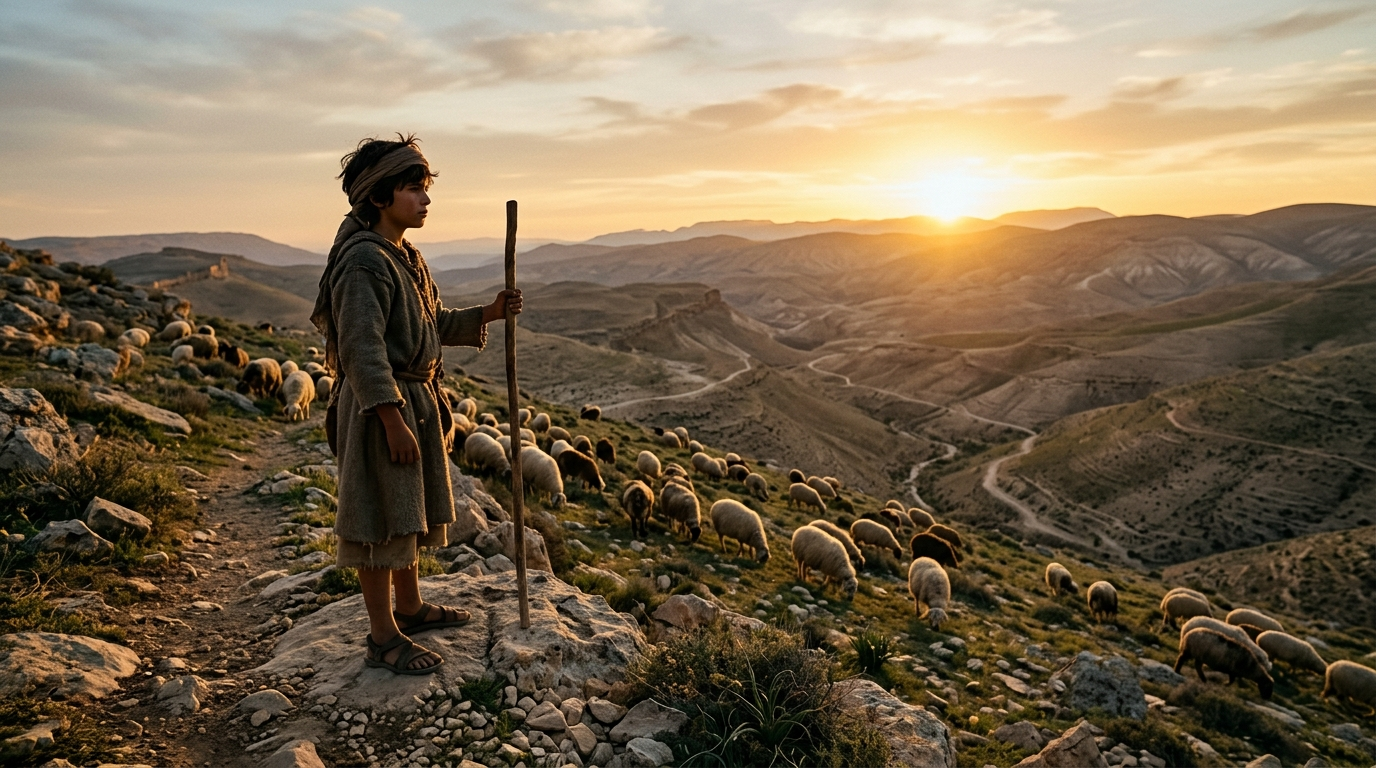
Prophet Elijah climbed to the top of the mountain, knelt in the dust, and waited. He didn't wait for a hurricane; he waited for a wisp.
Why did Heaven send rain at the sight of a tiny cloud?
It wasn't because the cloud was big enough to hold water. It was because the cloud was a divinely timed sign —small in size but great in meaning. It was God’s confirmation that His promise was about to be fulfilled.
Part I: The Promise Before the Prayer 👂
Perceiving the Certainty of Rain 🎶
Before Elijah ever saw the cloud, he told King Ahab:
"Get thee up, eat and drink; for there is a sound of abundance of rain." —1 Kings 18:41 (KJV)
Elijah didn't hear physical thunder. The sky was clear. He perceived—by faith grounded in God's promise—the certainty of rain.
God had explicitly told him in 1 Kings 18:1, "I will send rain upon the earth."
Free 7-Day Journey
Go Deeper Into Scripture
7 cinematic devotionals delivered to your inbox — one story, one verse, one life-changing truth per day.
No spam. Unsubscribe anytime.
This teaches us a profound lesson: Prayer does not force God to act; prayer aligns us with what God has already willed to do. Elijah prayed earnestly not to "activate" a passive God, but because he believed God's word.
The Posture of Humility 🙇
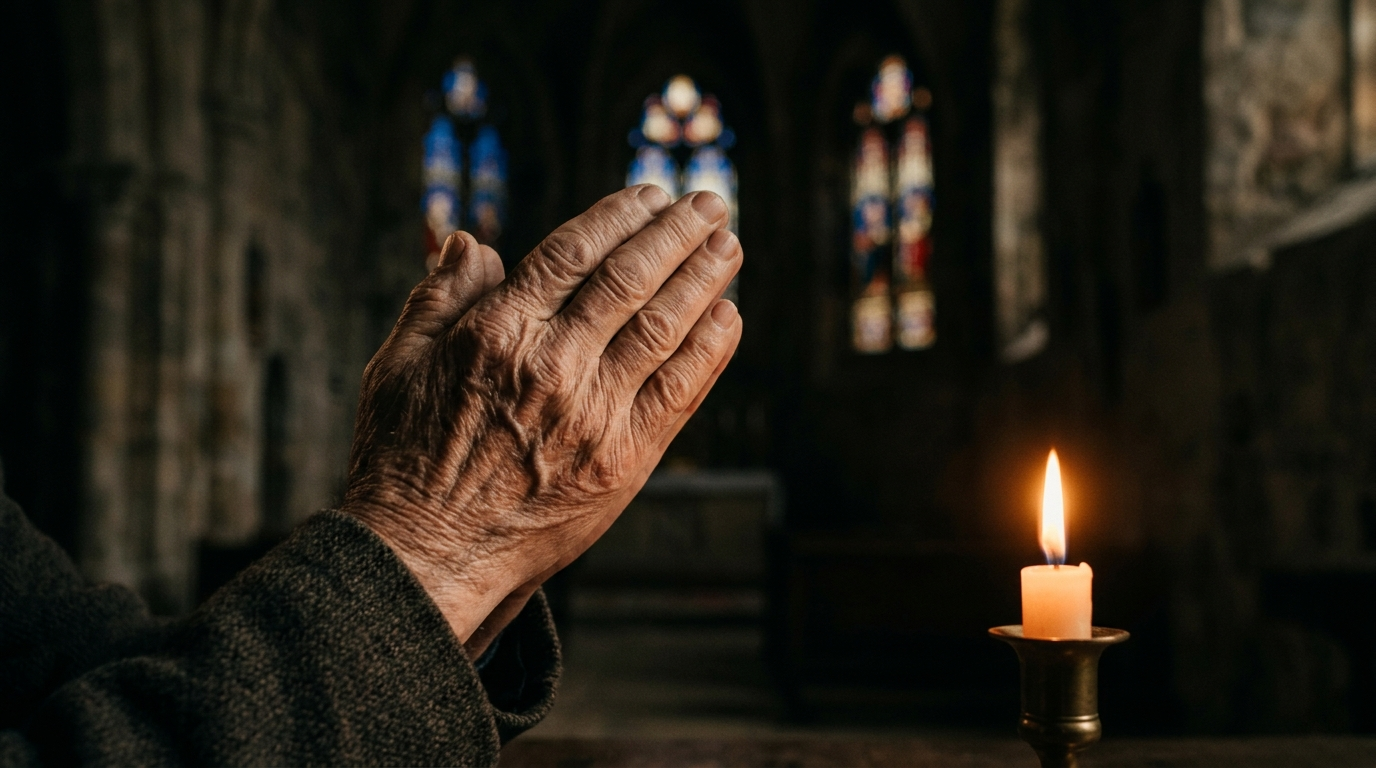
While King Ahab went to eat, Elijah went to pray. But look closely at his posture:
"He cast himself down upon the earth, and put his face between his knees." —1 Kings 18:42 (KJV)
This wasn't a mystical technique. It was a posture of deep, desperate, physical humility. It showed that even after a great victory on Mount Carmel, Elijah knew he was utterly dependent on God to finish the work. He bowed low because God is high.
Part II: The Theology of the Small Cloud ☁️
The Crisis of the Sixth Look 👀
Elijah sends his servant to look at the sea.
- Attempt 1: "There is nothing."
- Attempt 2: "There is nothing."
- Attempt 3, 4, 5, 6: "There is nothing."
This is where faith is tested. God honored Elijah’s persistence, not because there is a magic formula in the number seven, but because there is value in faithfulness. Elijah refused to let his eyes (which saw nothing) contradict his spirit (which heard the abundance).
Why a "Man's Hand"? ✋
On the seventh time, the servant reports: "Behold, there ariseth a little cloud out of the sea, like a man's hand."
Why a hand? Why not a massive thunderhead?
- God loves small beginnings: Zechariah 4:10 warns us not to despise the "day of small things." God often uses the small to confound the mighty.
- The Instrument of Prayer: The cloud looked like a man’s hand—perhaps a reminder that God uses human prayer as His chosen instrument to bring about His will on earth.
As soon as Elijah saw the sign, he knew the heavy rain was inevitable. He didn't wait for the storm; he acted on the promise.
For more on trusting God in the dark, read Why God Doesn’t Owe You an Explanation.
https://youtube.com/shorts/wnNKIstTSgk
Part III: The Hand of the Lord on the Runner 🏃
Supernatural Strength for the Task 🐎
The story ends with a miracle we often overlook. The sky turns black. The wind howls. King Ahab jumps in his royal chariot to race back to Jezreel.
Ahab has a head start and the best horses in Israel. Elijah is on foot. But then:
"And the hand of the LORD was on Elijah; and he girded up his loins, and ran before Ahab to the entrance of Jezreel." —1 Kings 18:46 (KJV)
Elijah ran by supernatural strength. This wasn't about "catching up on lost years"; it was a sign that God equips His servants for the tasks He appoints. When God calls you to move, He provides the power to get there.
Part IV: 3 Common Misconceptions About Elijah's Rain 💡
Misconception 1: Elijah’s prayer "caused" the rain.
- Correction: God’s promise caused the rain. In 1 Kings 18:1, God said, "I will send rain." Elijah’s prayer was the means, not the source. God’s faithfulness—not Elijah’s intensity—is the ultimate reason the rain fell.
Misconception 2: Elijah was a superhero who didn't struggle.
- Correction: Immediately after this victory, Elijah ran away in fear (1 Kings 19). James 5:17 specifically tells us, "Elijah was a man subject to like passions as we are." The power wasn't in his "super" nature; it was in his reliance on a Faithful God.
Misconception 3: You have to pray exactly 7 times to get an answer.
- Correction: There is no numeric formula for prayer. Jesus sometimes prayed once; sometimes He prayed all night. The number seven represents completion, symbolizing that we should pray until the answer comes or the burden lifts.
Conclusion: Get Your Chariot Ready 🌟
Why did the rain come? Because God keeps His covenant.
Maybe you are staring at a dry situation in your life. You have checked the horizon and seen "nothing."
Elijah’s story reminds us to go back to the promise. If God has said it, the cloud will rise. It may start small—a cloud the size of a hand—but the abundance is behind it.
Don't look at the drought; look at the Promise-Keeper.
Reflection: Are you praying based on what you see, or based on what God has said?
Did this article bless you? Share it!
Frequently Asked Questions
For Pastors & Church Leaders
Bring This Story to Life in Your Church
Cinematic sermon visuals, ready-to-use slides, and discussion guides — crafted for busy pastors who want depth without the hours.
Free 7-Day Journey
Unlock the Book of Revelation
7 days of guided study through end-times prophecy — no seminary required. Clarity on the seals, trumpets, and the return of Christ.
No spam. Unsubscribe anytime.