Theology Q&A
Why My Faith Feels Weak When Life Gets Hard (And How I Found Strength)
TL;DR
# Why My Faith Feels Weak When Life Gets Hard (And How I Found Strength)
Why My Faith Feels Weak When Life Gets Hard (And How I Found Strength)
I remember sitting in the fluorescent-lit waiting room of the hospital, the sterile smell burning my nostrils, the low hum of the machines a constant, irritating drone. My phone buzzed with another text from my sister, asking for an update on Mom. I stared at the worn linoleum floor, every fiber of my being screaming, "I can't do this anymore." My mother had been battling a relentless illness for months, and that morning, things had taken a turn for the worse. The doctor’s words still echoed in my ears: "We've done all we can."
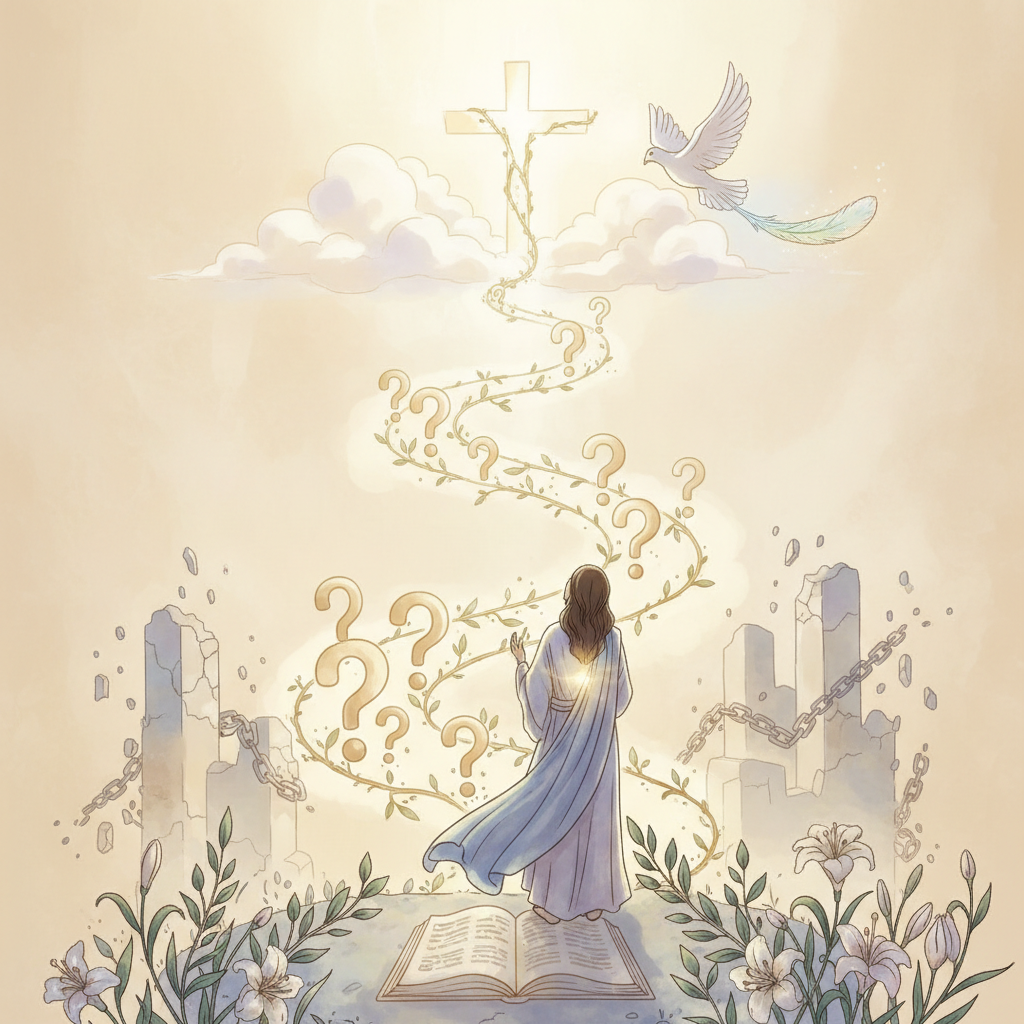
In that moment, all the Sunday school lessons, all the worship songs, all the confident pronouncements of "God's got this" felt like hollow clichés. My faith, which I had always considered a sturdy oak, felt like a brittle twig, ready to snap under the immense pressure. I’d always believed in the power of God, in His unwavering love, but faced with the crushing reality of my mother’s suffering and my own helplessness, my trust felt like sand slipping through my fingers. "Where are you, God?" I whispered, tears blurring my vision. "Why isn't my faith strong enough to fix this?"
It was a question I wrestled with for weeks, months even, long after we said our final goodbyes to Mom. My spiritual life, once vibrant, became a muted whisper. I still went to church, still read my Bible, but the joy, the conviction, the deep sense of connection—it was all gone. I felt like a spiritual failure, wondering if my faith was truly weak, or if I had just never truly understood it. I desperately craved faith answers, something real, something tangible to cling to.
One evening, flipping through my well-worn Bible, my eyes landed on a verse I had highlighted years ago, one I had often quoted with confidence, but now felt a strange distance from:
Romans 8:28 (NIV): "And we know that in all things God works for the good of those who love him, who have been called according to his purpose."
As I read it, a wave of cynicism washed over me. "All things for good?" I scoffed internally. "What good came out of watching my mother suffer? What good came out of this gaping hole in my heart?" This verse, once a source of comfort, now felt like a painful reminder of my current spiritual inadequacy. But deep down, a flicker of hope, a desperate longing for understanding, nudged me to dig deeper. I knew I needed to find a way back to that unwavering trust, to discover genuine faith answers that resonated with my broken spirit.
My Secret Struggle: When 'Trust God' Just Wasn't Enough
Before Mom’s illness, my spiritual journey, though not without its bumps, generally felt like an upward climb. I was involved in ministry, led a small group, and had a ready answer for almost any spiritual question. I was the person people came to for encouragement, for a dose of spiritual optimism. So, when my own world started to crumble, the last thing I wanted to admit was that I was struggling. My secret struggle was the gnawing fear that my faith was a performance, a carefully constructed façade, and that underneath it all, I was just as fragile as anyone else.
I remember a conversation with my friend, Sarah, about six weeks after Mom passed. We were having coffee, and she, ever the perceptive one, noticed my distant gaze. "You're not yourself, Jess," she said gently. I mumbled something about being tired, about grief, trying to deflect. But she pressed, "Are you still angry at God?" The question hit me like a physical blow. Angry? I hadn't dared to articulate that emotion, even to myself. But as soon as she said it, a torrent of unspoken resentment, confusion, and disappointment flooded me. I confessed, my voice barely a whisper, "Sarah, I feel like I believed all the right things, I prayed all the right prayers, and it didn't change anything. When people tell me to 'just trust God,' it feels like a slap in the face. It feels empty."
Free 7-Day Journey
Go Deeper Into Scripture
7 cinematic devotionals delivered to your inbox — one story, one verse, one life-changing truth per day.
No spam. Unsubscribe anytime.
That vulnerability, though terrifying, was the first crack in my carefully constructed wall. It allowed me to admit that my faith wasn't a formula, and that sometimes, "trust God" felt like an impossible demand when my heart was shattered. I realized then that my struggle wasn't unique. Many believers, perhaps even you, have felt this same spiritual inadequacy, this sense that our faith isn't quite strong enough when life hits its hardest. We want those definitive faith answers, but often, they elude us in our darkest hours.
The Truth About Romans 8:28 (It's Not a Magic Fix)
My initial understanding of Romans 8:28 was that it meant God would magically fix everything, or that every bad situation would immediately transform into something good in a way I could clearly see. I thought it meant my mother would be healed, or at the very least, that her passing would somehow bring about some immediate, identifiable "good" that would make the pain worthwhile. This expectation, I now realize, was flawed and led to immense disappointment.
As I began to revisit this verse, not with the aim of demanding an explanation from God, but with a humble desire to understand, I started to see it differently. I spent hours poring over commentaries, reading different translations, and praying for insight. I discovered that the Greek word for "works" (συνεργέω - synergéō) implies a co-working, a cooperation. It’s not God magically waving a wand and instantly changing a tragedy into a triumph. It’s God working within the tragedy, through the pain, alongside our brokenness, to bring about good. As Bible scholars on Blue Letter Bible often explain, the emphasis is on God's ongoing, active presence in the process, not just the outcome.
I also learned that "good" in this context isn't always what we define as good in the short term. It's not necessarily comfort, or ease, or even the immediate removal of suffering. It’s God's ultimate, eternal good—conforming us to the image of His Son (Romans 8:29). It’s about spiritual formation, character development, and a deeper reliance on Him. This isn't a quick fix; it's a profound, often painful, process.
This realization was a turning point for me. It meant I didn't have to pretend everything was okay. I didn't have to force myself to see the "good" in my mother's death right away. It allowed me to grieve honestly, to feel the pain without feeling like I was failing God. It meant that God was not obligated to make my immediate circumstances comfortable, but that He was committed to transforming me through them. This re-framing of Romans 8:28 was one of the most crucial faith answers I received.
What I Learned When God Seemed Silent
During those dark months, God felt incredibly silent. My prayers felt like they were bouncing off the ceiling. I felt alone, abandoned, and unheard. I worried that my lack of "strong faith" was the reason for His perceived absence. Had I done something wrong? Was I being punished? These thoughts plagued me, adding another layer of burden to my already heavy heart.
One evening, scrolling through podcasts, I stumbled upon a talk by a pastor discussing seasons of spiritual dryness. He spoke about how God's silence isn't always an absence, but sometimes an invitation—an invitation to listen differently, to seek Him beyond the familiar, to find Him not just in the answers, but in the yearning itself. He mentioned that often, in these times, God is refining us, teaching us to trust Him not just for what He does, but for who He is. As this resource from Desiring God explains, God's silence can be a powerful tool for spiritual growth.
This resonated deeply with me. I started to think about my own relationship with God. Had I become too dependent on Him for specific outcomes? Had my faith become transactional? It was a humbling realization. I had been so focused on getting my prayers answered in a particular way that I had lost sight of simply being with God, even in the pain.
I started small. Instead of trying to force eloquent prayers, I just sat in silence, acknowledging my pain, my anger, my confusion. Sometimes, I just cried. Other times, I’d put on some quiet worship music and simply exist in His presence, not asking for anything, just being. I started to read the Psalms, especially those where David laments and pours out his heart to God (Psalm 13 became a lifeline). In those honest, raw expressions of pain and doubt, I found a reflection of my own heart, and a strange comfort in knowing that even biblical heroes wrestled with God's perceived silence. This wasn't an immediate fix, but a slow, gradual process of learning to sit in the tension, trusting that even in the quiet, God was present. This deeper understanding of His presence, even in silence, provided profound faith answers.
How You Can Rebuild Your Faith When It Crumbles
Rebuilding my faith after it felt shattered wasn't a linear process. It was messy, full of setbacks, and required a lot of grace—both from God and for myself. If your faith feels weak, if you're wrestling with the "why" in your own life, here are some practical steps that helped me, steps that offer tangible faith answers for a weary soul:
-
Grant Yourself Permission to Be Honest with God: Stop pretending. Tell Him exactly how you feel—your anger, your doubt, your disappointment. He already knows, and He can handle it. My friend Sarah’s direct question about my anger was a catalyst for this. Begin journaling your raw emotions, or just speaking them aloud when you’re alone. It’s okay to say, "God, I don't understand Romans 8:28 right now, and I'm really struggling to believe it."
-
Re-examine Your Understanding of God (and Suffering): Often, our faith crumbles because our understanding of God is too small or too simplistic for the complexities of life. I realized I had an idealized view of God that didn't account for pain. Dive into resources that explore the problem of suffering from a Christian perspective. Books like C.S. Lewis's The Problem of Pain or articles from GotQuestions.org on suffering were incredibly helpful for me in reshaping my theology, not just intellectually, but spiritually. Understand that God is not just good, but also sovereign, and His ways are often beyond our comprehension.
-
Seek Community (Even When You Don't Feel Like It): I wanted to isolate myself, but it was in the gentle nudges of friends like Sarah that I found support. You don't have to put on a brave face. Find a trusted friend, a small group, or a mentor who can listen without judgment, pray with you, and remind you of God's truth when you can't see it yourself. Sometimes, their strong faith can carry you when yours feels weak. I started meeting weekly with Sarah for coffee, and those conversations were often the only time I felt truly seen and heard.
-
Focus on God's Character, Not Just His Promises: When promises feel broken, shifting your focus to who God is can be transformative. He is faithful, loving, just, merciful, sovereign, and unchanging. Even if I couldn't understand why something happened, I could still hold onto the truth of His character. I started listing attributes of God in my journal, slowly, deliberately, reminding myself of His eternal nature. This helped ground me when everything else felt chaotic.
-
Engage with Scripture Differently: Instead of just reading for answers, read for comfort, for connection, for lament. As I mentioned, the Psalms became incredibly important. Also, look for stories of biblical figures who struggled with doubt and despair, like Job or Jeremiah. See how God met them in their brokenness. The Bible Project (thebibleproject.com) offers fantastic videos that provide context and deeper understanding of biblical books and themes, which helped me engage with scripture in a fresh way.
-
Practice Gratitude (Even for Small Things): This felt impossible at first, but even acknowledging tiny blessings—a warm cup of tea, a sunny day, a kind word—can slowly shift your perspective and remind you of God's continued provision, even amidst the pain. I started a "gratitude journal" where I forced myself to write down three things each day, no matter how insignificant. It was a slow process, but it helped me start to see glimmers of His grace again.
Finding Your Strength in His Unwavering Love
The journey of rebuilding my faith wasn't about becoming "stronger" in the way I initially thought. It wasn't about pushing away doubt or forcing myself to feel conviction. It was about learning to lean into God's strength through my weakness. It was about understanding that my faith isn't dependent on my feelings or my ability to understand every circumstance, but on God's unwavering character and His eternal commitment to me.
I realized that even in my darkest moments, when I felt completely abandoned, God was there. He didn't prevent my mother's suffering, but He walked through it with her, and He walked through my grief with me. He didn't give me all the faith answers I wanted, but He gave me Himself. His love, I discovered, is not conditional on my ability to understand Him or my capacity for perfect faith. It simply is.
Today, my faith looks different. It's less about having all the answers and more about trusting the One who does. It's more resilient because it has been tested and refined. It's humble, acknowledging that I am utterly dependent on Him. And it's deeply, profoundly rooted in the truth of Romans 8:28, not as a magic fix, but as a promise that God is actively, lovingly, and eternally at work, even in the broken pieces of our lives, shaping them for His ultimate good, and for our ultimate conformity to Christ.
If you are reading this and your own faith feels fragile, please know you are not alone. It's okay to admit your struggles. It's okay to doubt. It's okay to feel angry. God is big enough for all of it. He is not surprised by your humanity. He is simply waiting for you to turn to Him, just as you are, and allow Him to meet you in your weakness.
Reflection Question: What specific aspect of God's character (e.g., His faithfulness, His love, His sovereignty) can you choose to focus on and cling to today, even if your circumstances feel overwhelming?
Did this article bless you? Share it!
Frequently Asked Questions
For Pastors & Church Leaders
Bring This Story to Life in Your Church
Cinematic sermon visuals, ready-to-use slides, and discussion guides — crafted for busy pastors who want depth without the hours.
Daily Devotionals
Start Your Day in the Word
Get a short, powerful devotional in your inbox every morning — Scripture, reflection, and a prayer to anchor your day.
No spam. Unsubscribe anytime.